
How to Plan Business Security Around Albuquerque Crime Trends
March 9, 2026 6:43 pm Leave your thoughtsPlanning business security around Albuquerque crime trends means identifying your most likely risks, matching protection to your location and industry, and using layered security that combines lighting, surveillance, access control, and trained personnel. For many Albuquerque businesses, the biggest threats are burglary, vehicle theft, vandalism, trespassing, and organized retail theft, especially after hours or in poorly monitored exterior areas.
- Start with a location-specific risk assessment.
- Focus on the crimes most likely to affect your business type.
- Use layered protection instead of relying on one system.
- Review crime patterns and internal incidents regularly.
- Combine technology with on-site security for faster response.
What It Means to Plan Security Around Crime Trends
Crime trend-based security planning is the process of building your protection strategy around the crimes most likely to occur in your area, industry, and operating environment. Instead of using a generic checklist, businesses evaluate local patterns, property layout, operating hours, and real-world vulnerabilities.
In Albuquerque, that often means prioritizing after-hours protection, parking lot security, access control, perimeter visibility, and rapid response to suspicious activity.
Understanding Albuquerque Crime Risks for Businesses
Albuquerque businesses face different threats depending on neighborhood, building type, traffic flow, and hours of operation. In many commercial settings, property crimes create more day-to-day risk than violent crime. These incidents can still cause major financial loss, disrupt operations, and damage customer trust.
Common business security concerns in Albuquerque include:
- Commercial burglary after business hours
- Vehicle theft in dark or unsecured parking areas
- Vandalism and graffiti near busy corridors
- Shoplifting and organized retail theft
- Trespassing at construction sites and industrial properties
- Unauthorized access to offices, warehouses, and loading zones
Businesses located near major roads, transit routes, mixed-use areas, or high-traffic commercial zones may need stronger deterrence and more frequent monitoring. Many companies benefit from visible security patrol services that help reduce opportunities for theft and trespassing.
Why Localized Security Planning Matters
A business security plan should reflect the realities of your property, not a generic template. Albuquerque businesses often operate on large lots, in standalone buildings, or in areas with wide parking fields and multiple access points. These layouts can create blind spots and make fast intervention more difficult.
Localized planning should consider:
- Seasonal changes in criminal activity
- Special events and festivals that increase traffic
- Nearby businesses that attract similar activity
- Exterior layout, lighting, and visibility
- Law enforcement response considerations by area
This type of planning makes your strategy proactive. It helps you address vulnerabilities before they turn into incidents.
How to Conduct a Business Security Risk Assessment
A risk assessment helps identify where your business is exposed and which upgrades should come first. It is one of the most effective ways to improve security without overspending.
Key Areas to Evaluate
- Doors, windows, gates, and loading docks
- Parking lot and perimeter lighting
- Camera placement and coverage gaps
- Access control for employees, vendors, and visitors
- Cash handling routines and closing procedures
- Past incidents, attempted thefts, and near misses
Questions Business Owners Should Ask
- Do employees work late or open early alone?
- Are valuable items visible from outside?
- Are deliveries or deposits made on predictable schedules?
- Is the property easy to approach without being seen?
- Are there areas where staff or customers may feel unsafe?
A professional assessment can reveal issues that are easy to overlook during normal operations. Businesses that need more active oversight often pair assessments with on-site security guard services for stronger daily protection.
Build a Layered Security Plan
The most effective business security plans use layered protection. This means multiple security measures work together so that if one layer fails, another still reduces risk.
1. Strengthen Physical Security
Physical barriers slow down criminals and create visible deterrence.
- Reinforced doors and commercial-grade locks
- Security film on vulnerable glass
- Fencing around restricted areas
- Bollards or barriers where needed
- Bright, consistent exterior lighting
2. Improve Surveillance and Monitoring
Surveillance helps deter crime, document incidents, and improve response time when monitored properly.
- High-resolution cameras with night capability
- Motion-activated recording systems
- Remote viewing for managers
- Alarm integration with monitoring services
- Coverage for entrances, parking lots, alleys, and loading zones
3. Add Trained Security Personnel
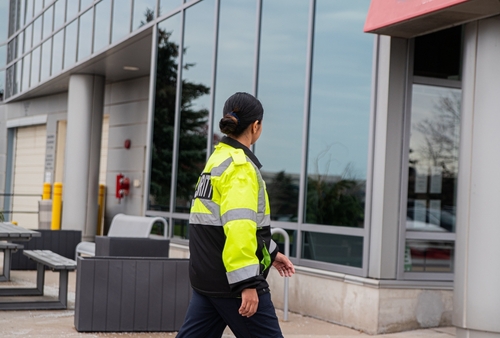
Technology helps detect issues, but trained personnel can assess situations in real time and take immediate action. A visible guard presence is especially useful in high-risk areas, large properties, and customer-facing environments.
On-site guards can:
- Conduct regular interior and exterior patrols
- Monitor camera feeds in real time
- Manage access points and credentials
- Respond to suspicious activity immediately
- Document incidents thoroughly
- Coordinate with law enforcement and emergency responders
For businesses with extensive exterior space, mobile patrol coverage for commercial property can be an efficient way to secure parking lots, perimeters, and access roads.
Industry-Specific Security Planning
Different business types face different risks. A strong plan should reflect what criminals are most likely to target in your industry.
Retail Businesses
Retail stores often face shoplifting, organized theft, loitering, and after-hours break-ins.
- Uniformed guards near entrances
- Visible camera coverage in high-value areas
- Loss prevention training for staff
- Parking lot monitoring during peak hours
Construction Sites
Construction sites are frequent targets because they contain tools, copper, machinery, and materials that can be removed quickly.
- Controlled access gates
- Temporary lighting towers
- Perimeter checks after hours
- Equipment tracking and inventory controls
Companies managing active jobsites often need dedicated construction site security to reduce theft, vandalism, and unauthorized entry.
Office Buildings and Professional Facilities
Office environments may face unauthorized access, property damage, and workplace safety issues.
- Visitor sign-in procedures
- Employee badge access
- Lobby security presence
- Emergency response planning
Industrial and Warehouse Properties
Warehouses and industrial sites often require perimeter security, vehicle monitoring, and overnight patrols.
- Perimeter checks
- Trailer and vehicle inspections
- Access management for drivers and vendors
- Protection of inventory and equipment yards
How Employees Support Business Security
Security is stronger when employees know what to watch for and how to respond. Staff often notice unusual behavior before a serious incident occurs.
Employee training should cover:
- Recognizing suspicious activity
- Cash handling best practices
- Lock-up and closing procedures
- Visitor management expectations
- How to report concerns quickly
- Emergency response steps
When staff understand procedures and communication channels, they become an active part of your prevention strategy.
Use Data to Keep Your Security Plan Current
Crime trends change over time. A plan that worked last year may not fully address current risks. Ongoing review helps businesses stay prepared and adjust before problems escalate.
Useful review practices include:
- Quarterly security reviews
- Annual risk assessments
- Regular incident report analysis
- Emergency drills and response exercises
- Review of recurring trouble spots on the property
Tracking incident types, timing, and locations can help refine patrol schedules, improve camera placement, and support better staffing decisions.
Why Community Partnerships Improve Security
Businesses that share information with neighboring tenants, property managers, and community groups often spot patterns faster. Criminal activity rarely affects only one property. When nearby businesses communicate, the entire area becomes harder to target.
Community collaboration can support:
- Awareness of recent incidents
- Improved exterior lighting across shared areas
- Coordinated reporting of suspicious activity
- Greater visibility through overlapping patrol presence
Balancing Safety With Customer Experience
Security should protect your business without making customers or visitors uncomfortable. Professional security personnel are trained to remain alert while still being approachable and respectful.
Well-trained guards can:
- Greet visitors professionally
- Provide directions and assistance
- De-escalate tense situations calmly
- Support a safer and more organized environment
Visible security can strengthen customer confidence when it is implemented with professionalism and consistency.
Prepare for Everyday Incidents and Emergencies
Business security planning should cover more than theft and vandalism. Companies also need clear procedures for medical emergencies, fires, evacuations, and other urgent situations.
Key elements include:
- Clearly marked evacuation routes
- Designated assembly points
- Communication procedures for staff
- Emergency contact protocols
- Coordination with first responders
On-site security personnel often serve as the first point of response until emergency services arrive.
Experience-Based Insight: What Works in Real Business Environments
In real commercial settings, the most effective security plans usually share the same traits. They are visible, consistent, and matched to the property’s actual risks. Businesses often see the biggest improvement when they fix exterior vulnerabilities, improve after-hours oversight, and add trained personnel where quick judgment matters most.
Security planning works best when it is practical. A strong plan should be easy for managers to maintain, clear for employees to follow, and flexible enough to adapt as risks change.
Frequently Asked Questions
What crime trends should Albuquerque businesses pay the most attention to?
Most businesses should focus on property crimes such as burglary, vehicle theft, vandalism, trespassing, and organized retail theft. These incidents are common sources of financial loss and often occur in parking lots, exterior areas, and buildings left vacant after hours.
How often should a business review its security plan?
Most businesses should review their security plan at least quarterly and complete a more detailed assessment annually. Plans should also be updated after major incidents, operational changes, renovations, or shifts in business hours, staffing, or inventory levels.
Are cameras enough to protect a business?
Cameras are useful for deterrence, monitoring, and evidence collection, but they do not physically intervene. Many businesses get better results when surveillance is combined with lighting, access control, alarm monitoring, and trained security personnel who can respond immediately.
Which businesses benefit most from on-site security guards?
Retail stores, construction sites, warehouses, office complexes, healthcare facilities, and businesses with large parking areas often benefit the most. Guards are especially valuable where there is public access, high-value property, after-hours exposure, or a need for quick in-person response.
How do you build a security plan around local crime patterns?
Start with a property-specific risk assessment, identify the crimes most likely to affect your area and industry, then build layers of protection. Focus on lighting, surveillance, access control, employee procedures, and security staffing that match real operating conditions.
Bottom Line
Planning business security around Albuquerque crime trends means aligning your protection strategy with local property crime risks, property layout, and industry-specific exposure. Businesses that use risk assessments, layered security measures, trained personnel, and regular reviews are better positioned to prevent loss, protect employees, and respond quickly when problems arise.
Protect Your Business with Advance On-Site Protection Security
Advance On-Site Protection Security helps Albuquerque businesses build smarter, stronger security plans based on real operating conditions and local risk factors. Our team provides professional protection for retail stores, construction sites, office buildings, warehouses, and other commercial properties throughout the area.
Whether you need on-site guards, mobile patrols, access control support, or a more comprehensive business security strategy, we deliver tailored solutions designed around your needs.
Contact Advance On-Site Protection Security today at 505-897-1307 to discuss a customized plan for your Albuquerque business.
Categorised in: Security
This post was written by admin